


Can Two People See the Same Thing Differently? | Curious Kids

Two people look at the same object and notice different things. Does that mean one of them must be wrong? This Curious Kids lesson invites children to pause, listen, and investigate.
The little cardboard house
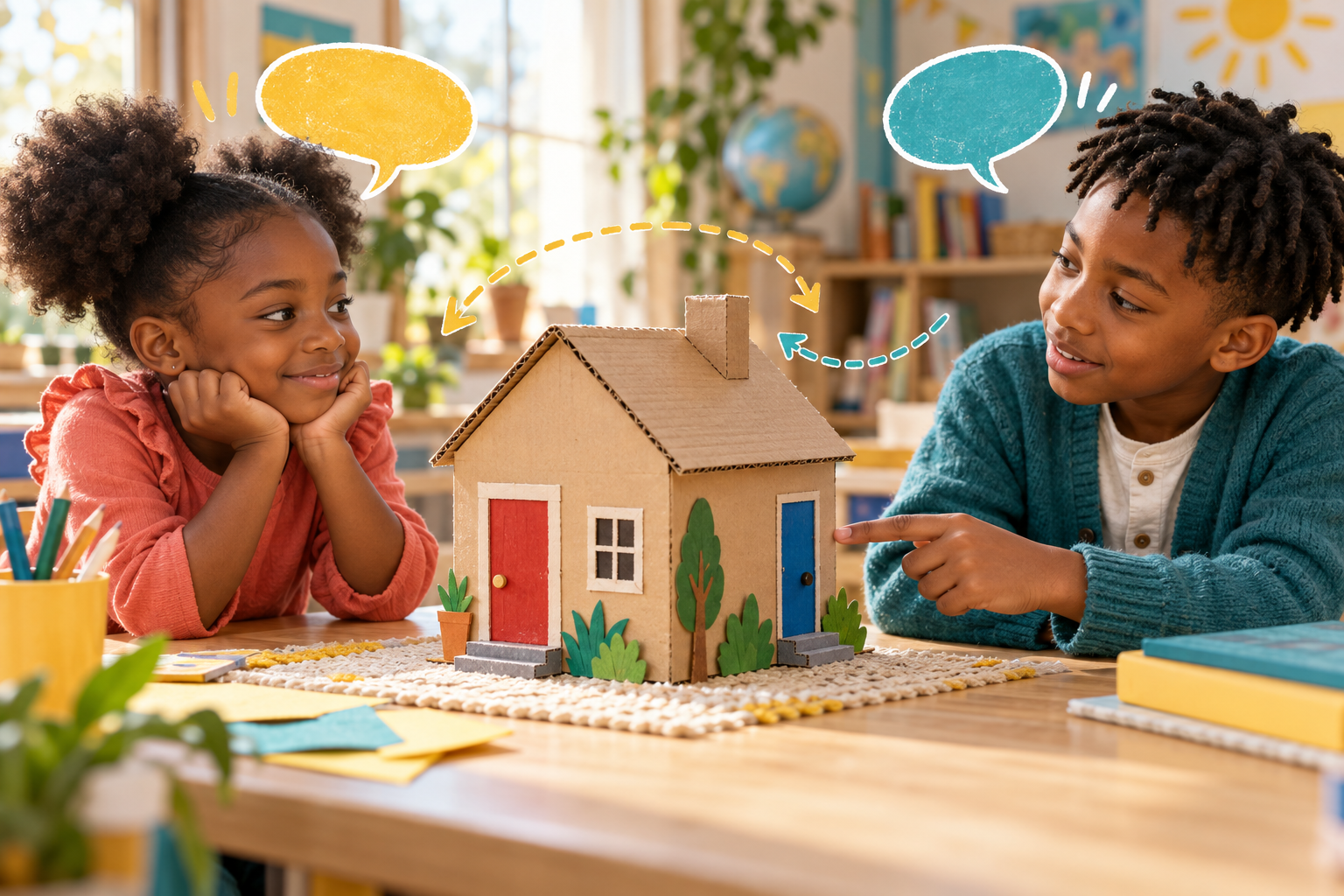
Amara and Jay are sketching a cardboard house. “I can see a red door,” says Amara. Across the table, Jay says, “I can see a blue door.” Before arguing, they ask a better question: “Which side can you see?”
They walk around the table together. The house has two doors—one red and one blue. Each child had noticed a real detail, but neither had seen the whole model. Listening did not change the house. It changed how much information they had.
What can we learn?
An observation describes what we notice: “I see a red door.” An inference goes further: “There is only one door.” Curious thinkers ask whether the evidence supports that extra step.
A viewpoint can mean the place we look from. It can also mean how we think about something. Asking someone to explain their viewpoint can reveal information we missed.
Listening is a beginning, not a verdict. Different viewpoints do not automatically make every claim correct or equally well supported. We can listen respectfully and then check the evidence together.
Try it together
With an adult, draw different shapes on opposite faces of a small box. Sit across from a partner and keep the box still. Each person describes only what they can see. Then swap places. What new details become visible?
Questions for curious kids
What did each child know at first? What did they assume?
What question helped them understand each other?
How is “This door is blue” different from “Blue is the prettiest color”? One is checkable; the other expresses a preference.
Choose your free printable
Ages 5–7: A two-page read-together story, conversation prompts, a two-view box activity, drawing space, and grown-up guidance.
Ages 8–10: A three-page lesson with thinking tools, a viewpoint investigation, fact-and-preference questions, reflection space, and grown-up guidance.
Both are free digital products. Choose your version and complete the $0 checkout to receive the printable PDF.
A sentence to practice: “Tell me what you noticed. Let’s look together.”


Comments